Artificial intelligence is no longer limited to research labs or tech companies. Today, large language models quietly support everyday activities—from drafting messages to simplifying complex ideas. If you’ve ever relied on AI to summarize information, generate content, or assist with problem-solving, you’re already experiencing LLM daily life in practice.
Understanding how large language models fit into daily routines helps both individuals and businesses unlock new levels of productivity. Instead of replacing human effort, these systems enhance how we think, communicate, and make decisions.
This article explores a powerful way LLMs influence daily life, real-world examples, and the infrastructure that enables modern AI experiences.
What Is an LLM?
A large language model is a type of artificial intelligence trained on vast amounts of text data. By analyzing patterns in language, it learns to understand context and generate meaningful responses.
Unlike traditional software that follows rigid instructions, LLMs adapt based on input and intent. They can:
- Write or refine text
- Answer questions conversationally
- Summarize lengthy documents
- Assist with research
- Support coding tasks
- Provide contextual suggestions
Many modern LLM examples include AI chat interfaces, smart writing assistants, automated customer service tools, and AI-powered search systems.
The real strength of large language model technology lies in its ability to interact naturally with users.
One Powerful Way LLM Helps in Daily Life
Enhancing Communication and Decision-Making
Among the many LLM uses, one of the most impactful is improving how people communicate and process information.
Daily workflows often involve repetitive mental tasks:
- Writing professional emails
- Structuring reports
- Interpreting long conversations
- Brainstorming ideas
- Translating complex information into simple language
Large language models help by transforming rough input into clear, organized output. Instead of starting from scratch, users collaborate with AI to produce better results faster.
For professionals, this reduces time spent drafting and editing. For individuals, it simplifies thinking processes and reduces cognitive fatigue.
This is where AI daily use becomes meaningful—helping users focus on decision-making rather than formatting or rewriting.
Real-World LLM Examples
Professional Communication Support
A project manager preparing a stakeholder update can use a large language model to organize scattered notes into a clear, structured summary. The AI helps refine tone and ensures clarity.
Content Creation Assistance
Marketing teams frequently rely on AI to expand outlines into initial drafts, suggest headlines, or refine messaging. Instead of replacing creativity, LLMs accelerate the writing process.
Education and Learning
Students use AI tools to break down difficult concepts, generate summaries, and create study materials. This improves understanding while saving time.
Meeting Recap Automation
After virtual meetings, transcripts can be processed by a large language model to extract key decisions, action points, and summaries. Teams stay aligned without manually reviewing long recordings.
Developer Productivity
Software engineers often use LLM-powered tools to troubleshoot issues, generate code snippets, or understand unfamiliar programming concepts.
These everyday scenarios demonstrate how large language models are becoming practical productivity tools.
How AI Daily Use Is Transforming Productivity
The biggest impact of AI isn’t just automation—it’s augmentation.
LLMs enhance human capability by:
Reducing Repetitive Tasks
Routine writing and formatting work can be completed faster.
Accelerating Research
Users receive summarized insights instead of scanning multiple sources.
Improving Idea Structuring
Large language models help organize thoughts into logical frameworks.
Increasing Work Speed
Projects move forward faster when drafting and brainstorming are supported by AI.
Organizations adopting AI-driven workflows often see improvements in efficiency and collaboration.
Role of AI Assistants
Modern AI assistants powered by large language models are integrated into everyday tools such as:
- Email platforms
- Customer support systems
- Knowledge bases
- CRM software
- Collaboration applications
These assistants function as intelligent partners rather than simple automation tools. They interpret intent, provide contextual responses, and help users navigate complex information.
This shift from search-based interaction to conversational interaction is transforming digital workflows.
Infrastructure Behind LLMs
Although interacting with AI feels simple, the technology behind it is extremely advanced.
Large-scale models rely on:
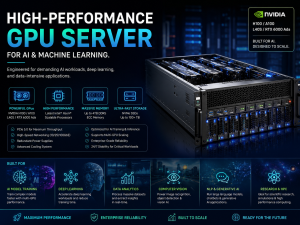
- High-performance computing environments
- GPU acceleration
- Optimized storage and networking
- Efficient compute orchestration
Enterprise AI deployments frequently leverage hardware like the NVIDIA A100, which delivers powerful parallel processing capabilities essential for deep learning workloads.
Additionally, AI systems require optimized environments supported by a dedicated CPU to manage tasks such as preprocessing, scheduling, and system orchestration.
Platforms such as GPU cloud providers make this infrastructure accessible, allowing businesses to deploy AI solutions without managing complex hardware internally.
How Micro Data Centers Support AI in Daily Life
Behind many modern AI applications used in daily life, a micro data center plays an important role in delivering fast and reliable performance. These compact, modular infrastructure units bring computing power closer to users, helping AI tools respond faster with lower latency. As LLM-based AI assistants and smart applications grow, micro data centers allow businesses to deploy scalable AI infrastructure at the edge without building large traditional facilities. This makes everyday AI experiences—from real-time automation to personalized services—faster, more efficient, and easier to access.
Challenges and Misconceptions
Despite growing adoption, several misconceptions still exist:
1. Large Language Models Do Not Replace Human Expertise
They enhance productivity but still require human oversight.
2. AI Responses Are Not Always Perfect
Verification remains essential for critical use cases.
3. AI Is Not Only for Developers
Non-technical users increasingly benefit from AI-powered tools.
4. Effective Use Requires Strategy
Understanding how to ask questions and refine prompts improves outcomes significantly.
Future of LLM Usage
The next phase of AI will involve deeper integration into everyday workflows.
Expected trends include:
- Personalized AI assistants tailored to individual workflows
- Voice-first interfaces
- Industry-specific language models
- Real-time collaboration with AI agents
As computing infrastructure advances and GPU resources become more widely available, large language model capabilities will continue to expand.
Businesses that adopt AI early gain advantages in speed, scalability, and innovation.
Conclusion
So, what is one way large language models are used in daily life?
A key impact is improving communication and supporting better decision-making through intelligent assistance. Whether drafting emails, summarizing information, or helping solve problems, large language models enhance productivity across personal and professional environments.
The evolution of AI daily use shows that these systems are becoming trusted collaborators rather than experimental tools.
Understanding how to leverage LLM in daily life effectively allows users to work smarter, communicate better, and unlock new possibilities powered by modern AI.
FAQs
1. What is a common example of LLM use in daily life?
Using AI to draft emails, summarize documents, or answer questions quickly is one of the most common examples.
2. How do LLMs improve everyday productivity?
They reduce manual writing tasks, organize information, and help users generate ideas faster.
3. Are LLM tools suitable for business use?
Yes, when combined with proper data security and human review processes.
4. What hardware powers LLM technology?
High-performance GPUs such as NVIDIA A100 and optimized compute environments help run AI workloads efficiently.
5. Will LLMs replace human jobs?
LLMs are more likely to assist humans and increase efficiency rather than replace roles entirely.